McCurdy Group - Insurance and Financial Consultants
Showing posts with label home contents. Show all posts

Wednesday, December 9, 2015

Tips for Insuring Your High Value Jewelry


Christmas is a popular time for new jewelry purchases.  Between engagements, holidays, and all of those jewelry sales, it seems like everyone has a few new trinkets by the time January rolls around. 

If you’re investing in a new ring or receiving any special jewelry, then there are a few things you need to know about jewelry insurance!  Let me help….

Jewelry is part of the Contents coverage on your Home or Renters policy.  It is covered on a basic level, but it’s usually not enough coverage if you have several nice pieces.  (This varies by policy so call us to find out exactly how much coverage you have.) 

But there is a special coverage you can ADD to your policy to insure each piece of jewelry!  It’s called “scheduled personal property”. 

You simply send us a copy of the appraisal (sometime’s a receipt will work too) and we can tell you exactly how much it will cost to insure it.  Many times it’s less than $20-30 per year!  (It really depends the value.) 

We can also discuss how this coverage protects you if you lose the jewelry and if you’ll still owe a deductible. 

Even if you don’t want to insure each piece of jewelry you own, you can still increase your overall jewelry coverage to make sure that there is enough to protect your collection.  You will still want to add photos, descriptions, and appraisals or receipts to your Home Inventory! 


The holiday season is a magical time!  Make sure that your beautiful gifts are protected.  Call us today to get started!  

Thursday, March 5, 2015

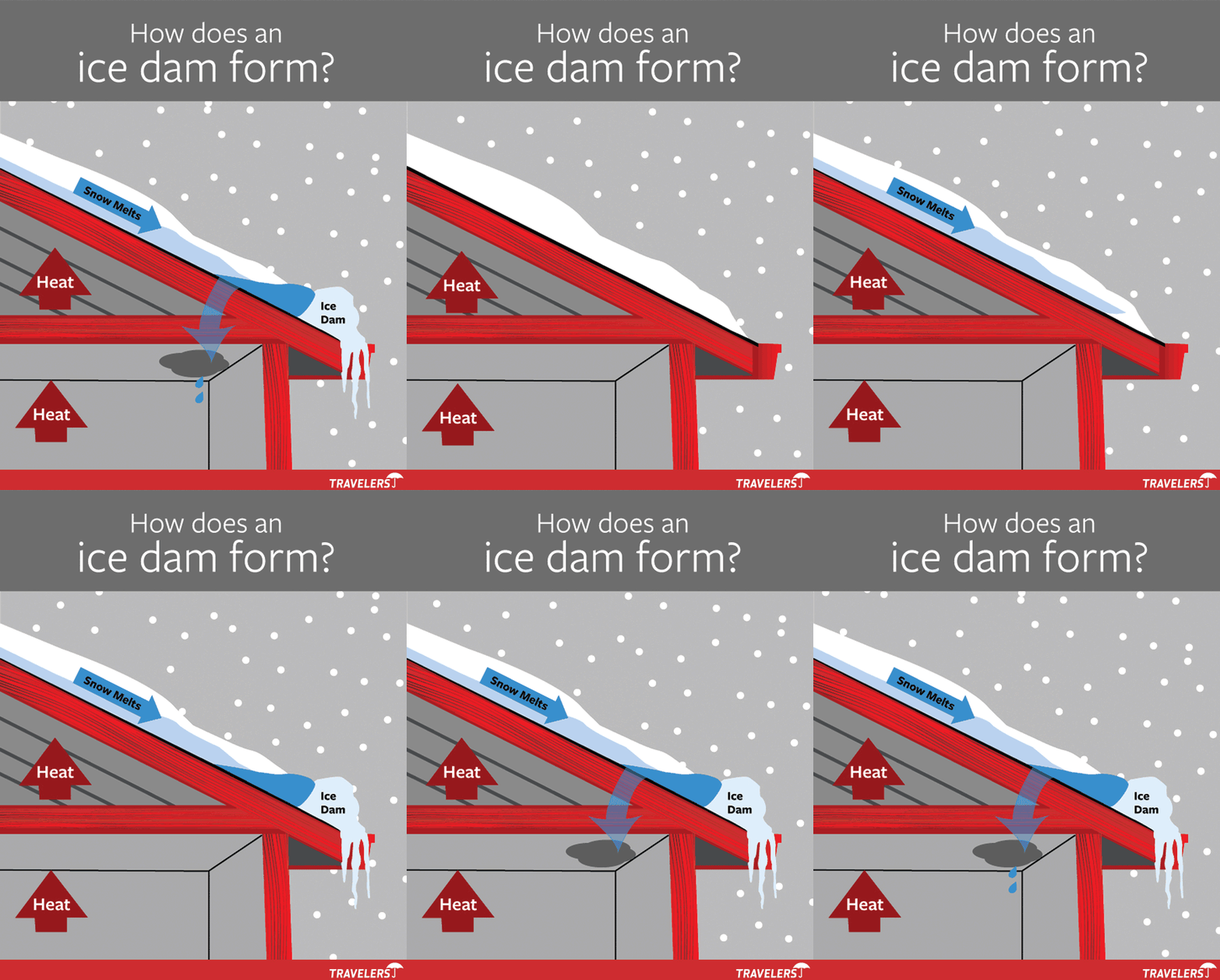
Do you have ice dams?

You can help prevent serious damage to both the roof and inside of your home by minimizing the likelihood that an ice dam will develop, and by removing one as soon as you spot it. Ice dams can form when water from melting snow re-freezes at the edge of your roofline. Without roof snow removal, an ice dam may grow large enough to prevent water from draining off the roof. This water can then back up underneath roof shingles and make its way into your home. 


How Do You Know if You Have an Ice Dam?

  • Look carefully at the icicles around the exterior of your house. If they are confined to the gutters and there is no water trapped behind them, then an ice dam has likely not formed. Nonetheless, icicles can pose a danger to people when they fall off, so try to safely knock them down while standing on the ground, making sure not to stand directly beneath them. If you cannot safely reach them from the ground, consider hiring a contractor to help.
  • Check for water stains or moisture in the attic or around the tops of exterior walls on the top floor of your house. Stains and moisture may indicate that an ice dam has formed and water has penetrated the roof membrane.
  

How to Remove an Ice Dam:

  • Melt the ice dam. Fill a nylon stocking with calcium chloride ice melt, and place it vertically across the ice dam so that it melts a channel through the dam. If you try this, make sure you can safely position the ice melt on your roof, and make sure to use calcium chloride, not rock salt. Rock salt will damage your roof. Also, be aware that shrubbery and plants near the gutters or downspouts may be damaged.
  • Get professional help. If you cannot safely reach the roof, avoid using a ladder in snowy and icy conditions. Consider hiring a contractor to remove the ice dam.

I you need the help of a contractor, we recommend Mike Dhembe, he can be reached at http://www.mdhembeschimneysweep.com/ and 508-765-9600.  

If you have any questions or concerns, please give us a call. 

Wednesday, December 17, 2014

Out with the old, in with the new!

When was the last time you looked closely at your oil tank?

Does it look more like this?                                                            


Or like this?


The McCurdy Group has recently upgraded our oil tank, and we would like to encourage you to consider doing the same. Did you know that when fuel oils leaks, it has the potential to ruin concrete floors, wood support beams, and even beneath floors and walls. If the area is saturated with fuel oil, demolition and removal can be your only option. And if the fuel oil leaves the house though cracks in the floors, drain tile systems, or sump pump, an environmental investigation may be necessary to check for soil and ground water pollution. The fuel oil can also cause damage to anything that is being stored near the tank.

If your tank look's questionable, you can call River Air HVAC at 774-230-6880. They did a wonderful job replacing our tank, and will be able to help you too.
If you are worried about a leak in your fuel tank these damages may be covered under your homeowners policy or the coverage may be available for purchase, you should contact your insurance agent.

Wednesday, March 12, 2014

A Vacant Home, Doesn’t My Homeowner’s Policy Still Cover It?


Say you purchase and move into a new home but your old home still hasn’t sold.  Or you have inherited a house and cleaned out all the contents.  Should you be concerned about the homeowner’s coverage on these homes? YES! The moment that you move everything out of the home, that home is no longer occupied and your homeowner’s policy needs to be changed.

After 30 days of being vacant, the following coverages are no longer available:
  • Vandalism
  • Malicious mischief
  • Glass

After 60 days of being vacant, the following coverages are also removed:
  • Fire
  • Lightening

Can you see where these vacant homes are vulnerable?  If you have a home is vacant for any reason, please contact your Insurance Agent to discuss your options before a loss occurs.